💵 Itaú
Frontend Engineer - Angular 2+ | 📅 Mar 2018 - Jun 2019
🌲 Project Treemap
Unavailable due to development constrained on the company internal environment.
🧱 Tech Stack
- Accessibility: Axe, Screen Reader APIs, WCAG AA
- Build Tools: Node.js, npm, semantic-release, Webpack
- CI/CD: Git, Husky, JFrog Artifactory
- Collaboration: Cross-squad integration, Shared Knowledge Base
- Documentation: Confluence, Internal Design System Docs
- Frameworks: Angular 7, AngularJS
- Languages: CSS3, HTML5, JavaScript, TypeScript, SASS
- Project Management: Confluence, Jira
- Testing: Headless Chrome, Jasmine, Jest, Karma
- UI Tools: Design Tokens, KSS, Mixins, SASS Utilities, Storybook
- Version Control: Git (multi-repo architecture, company repository)
🌟 STAR Cases
STAR Case – No compliance with WCAG Standards
Situation
With more than 90 million users and about 24% of the population living with some form of disability, a significant number of customers faced barriers using the app. The company had begun enforcing WCAG accessibility standards across all digital products.
Task
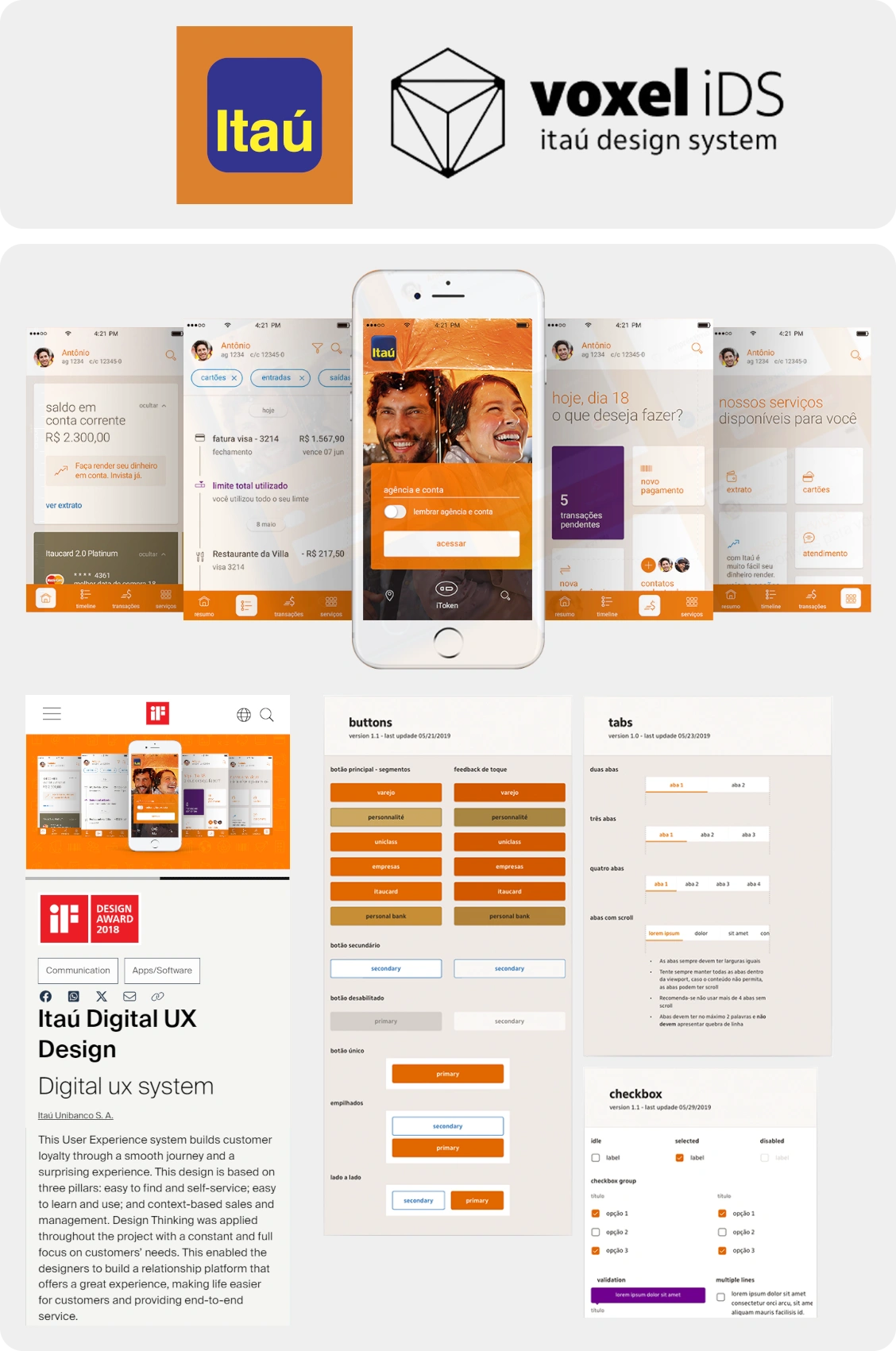
As part of a cross-squad design system team, I was responsible for ensuring the new Angular 7 components complied with WCAG 2AA accessibility standards. The team was tasked to:
- Integrate accessibility requirements into the design system’s development workflow.
- Validate accessibility with real users, supported by a dedicated QA subteam composed of people with disabilities.
- Guide external consultancy to accelerate implementation and ensure technical alignment with accessibility best practices.
Action
The effort began by contracting and onboarding a 7-person consultancy team, integrating them into our workflow and setting up their environments to match the internal CI process. With the team established, collaboration expanded to the QA group of testers with disabilities, whose feedback guided accessibility refinements in real use cases. As the work evolved, our squad became the bridge between design and engineering, revisiting UI patterns and adjusting layouts, color palettes, and interaction models to meet WCAG 2AA standards. The development phase introduced ARIA roles, keyboard navigation, and color-contrast adjustments, ensuring full compatibility with NVDA, VoiceOver, and TalkBack. This transformed accessibility from a patch into a core design system feature. To close the cycle, the new practices were documented and distributed so future squads could maintain the same accessibility standards.
Results
- Achieved WCAG 2AA compliance: all components were validated through real-user testing with NVDA, VoiceOver, and TalkBack.
- Enabled inclusive access: more than 90 million users with gained full accessibility across the company digital products.
- Standardized accessibility by design: accessibility rules became part of the design system architecture, not a post-release addition.
- Ensured long-term scalability: documented practices and reusable patterns preserved accessibility compliance in all future products.
- Unified multidisciplinary collaboration: design, engineering, QA, and consultancy teams worked under a shared accessibility effort.