
💵 Safra
Staff Frontend Engineer - AngularJS 📅 Jun 2019 – Aug 2020
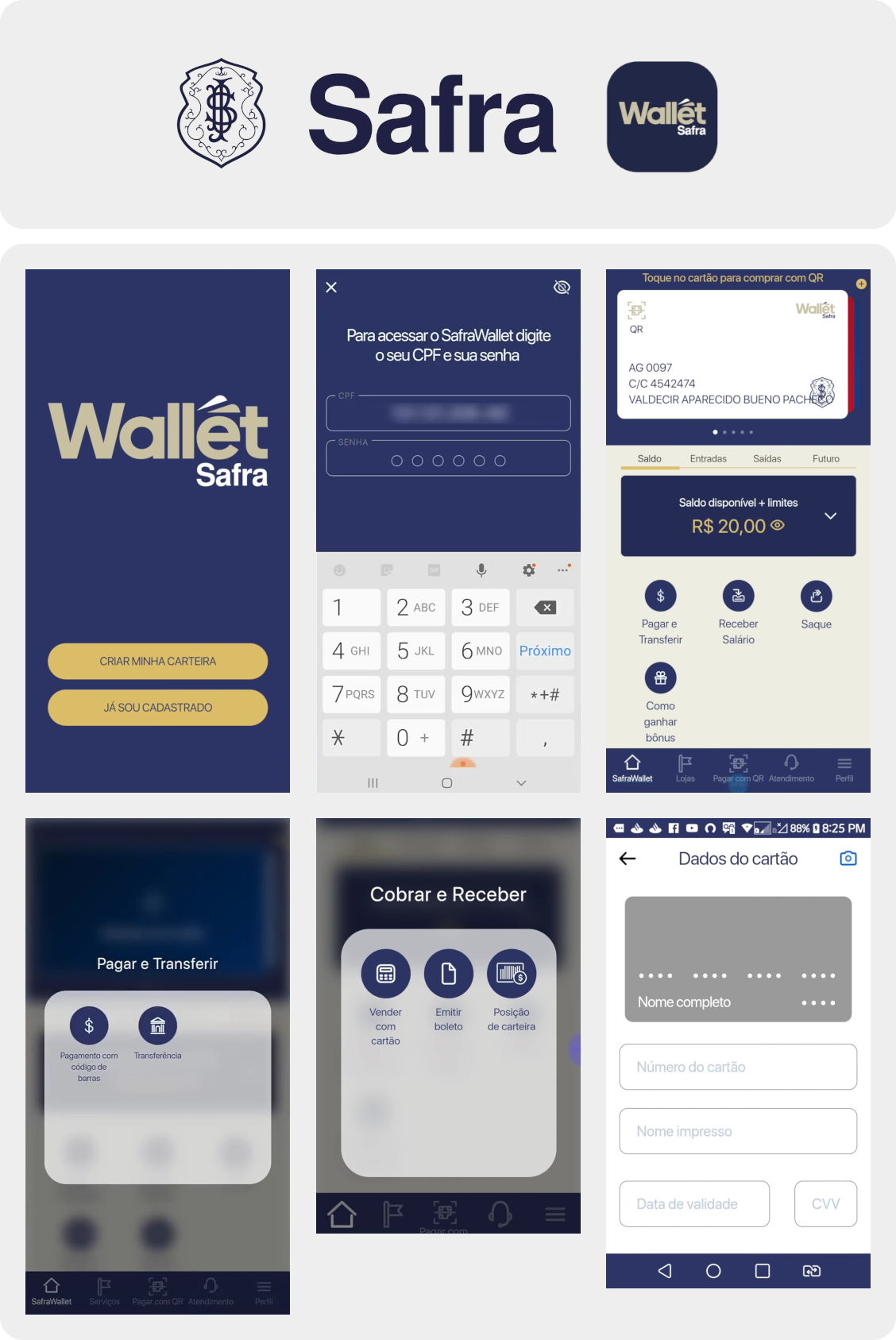
🌲 Project Treemap
Unavailable due to development constrained on the company internal environment.
🧱 Tech Stack
- Frameworks: AngularJS, Angular 9
- Languages: TypeScript, JavaScript, HTML5, CSS3, SASS
- Build Tools: Webpack, npm, Node.js
- CI/CD: Jenkins, Git, Custom Git Workflow
- Testing: Jasmine, Karma
- UI Tools: Sass, KSS
- Version Control: Git (internal repository)
- Project Management: Jira, Confluence
🌟 STAR Cases
STAR Case - Multiple Teams Conflicts Under Tight Deadline
Situation
The project faced an aggressive 6-month deadline with 30+ frontend engineers working across multiple projects (cards, ATM, onboarding, payments, profile). Each team maintained a separate codebase, yet all merged into a single release pipeline. The compressed schedule and overlapping workstreams created a chaotic environment of frequent overwrites, lost commits, unstable builds, and ongoing issues during quality assurance.
Task
Define and implement a reliable integration and release model to restore environment stability. The goal was to reduce merge conflicts, prevent code loss, and ensure predictable releases while meeting the delivery deadline.
Actions
I started by breaking down the entire release process from the top. To understand why the builds kept failing, I reverse engineered the pipeline, tracing it from the App Store approval steps all the way back to the developer commits.
Once I mapped the flow, I updated the Jenkins configuration to build only from predefined tags. Since there was no versioning strategy in place, I introduced a manual semantic release process that triggered deployments only when a new tag was created.
With the pipeline under control, I defined a new branching model inspired by GitHub Flow and GitFlow, extended to handle multiple environments.
After defining the model, I aligned with the team leads about the new process, detailing how developers should create branches, tag releases, and merge safely into the shared pipeline.
Below is a simplified diagram of the branching and release model that illustrates how the pipeline operated after those changes.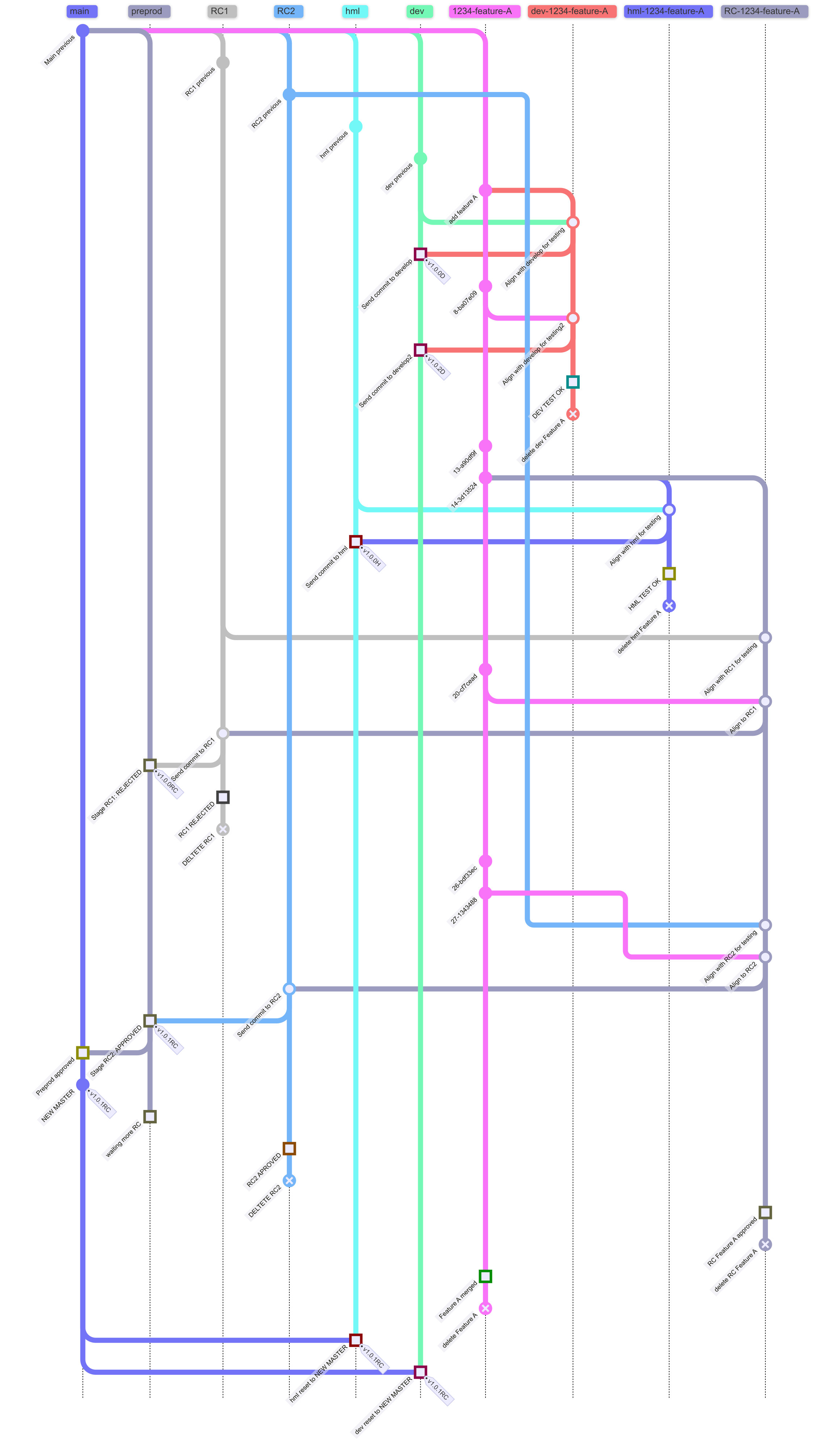
Results
- Controlled rollbacks: release tags and environment branches allowed instant restoration of any previous version.
- Consistent environments: cascading rebases kept develop, homologation, and preproduction branches synchronized with master after each release.
- Cross-team stability: the new model reduced merge conflicts from around 15 per release down to 2 on average.
- Developer safety: isolated branches protected individual work and the shared pipeline.
- Eliminated QA instability: fixed tags and controlled release candidates made every change traceable, ensuring consistent validation across environments.
- Predictable releases: flexible release candidates included only main commits and approved features, ensuring stable builds for users and quality assurance.
STAR Case - Inconsistent UI Across Teams
Situation
Under tight deadlines, each squad had its own designer and developers building features with no alignment across teams. Without a shared design source or centralized library, teams recreated the same components in different ways, leading to duplicated code, inconsistent visuals, and a fragmented user experience across the app.
Task
Bring visual and structural consistency back to the product by creating a single source of truth for UI. I needed to align all squads around one shared component library that could live inside the company restricted environment and be easy for every team to adopt without slowing delivery.
Action
I joined the design squad to understand the centralized work they were creating and took responsibility for bridging communication between designers and developers. After assessing each team’s workflow, I determined that the most effective way to standardize the UI was by creating a framework-agnostic, ready-to-use CSS component library instead of AngularJS components, allowing squads to use it in any context. I built the library with Sass for consistent styling and used KSS to document it with clear visual component references. To distribute it within the restricted network, I set up a bare Git repository on a shared internal resource, enabling all squads to pull updates directly into their projects.
Results
- Wide adoption achieved: the system’s simplicity and open contribution model enabled all squads to adopt it within weeks.
- Design drift eliminated: shared components and standardized styling unified behaviors and visuals across every module.
- Library stability proven: the architecture endured three facelifts and two complete redesigns without major refactoring.
- Documentation standardized: the KSS guide became the single reference for all squads and defined future documentation practices.